
Emotional Intelligence
Why It Can Matter More Than IQ

Published in 1995, this book continues to be a best seller ... and one that is worth reading.
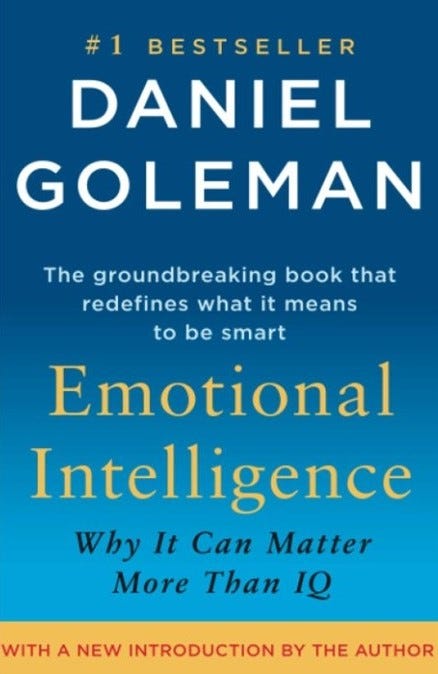
Emotions are at the heart of our decision-making process, they play a large role in our interaction with others and they are the means through which we view our world. Daniel Goleman, known for his Emotional Intelligence Theory, expands on "EQ" in this book and the five elements that comprise his theory: self-awareness, self-regulation, motivation, empathy, and social skills.
Here are some key "take-aways" from this book:
Emotions are the driver of actions and can push us to learn but they can also lead us to make bad decisions or demonstrate poor behaviour.
Building our emotional intelligence ("EQ") allows us to manage our responses and reach goals that we set for ourselves as well as engage positively with everyone around us.
EQ can make us more successful AND healthy and is something that is useful in any situation - home, school, the rink and tennis court.
So -- what does this mean in a learning environment? In addition to other benefits, studies have shown students with comparable IQs receive better marks if they also have higher levels of EQ. Anxiety, stress and health are managed and improved. In fact, Goleman suggests a couple of ways that we can further develop our EQ. These include making sure that we are encouraged to express our feelings and, when upset, take a break to gain space before reacting negatively. It is also important to reflect on our actions to consider whether there were alternate, more constructive, ways to manage our responses. Through self-reflection, we build our self-awareness and control. Stepping back also allows time to view situations more holistically and consider other perspectives to situations. The more frequently we undertake these approaches, our EQ improves and our impulse control and empathy builds.
Have you read this book? There are other "jewels" of thought in its pages. What were your impressions and what elements have your incorporating into your day-to-day thinking?